Type Meets Machine: What AI Is Actually Doing to the Font Design World
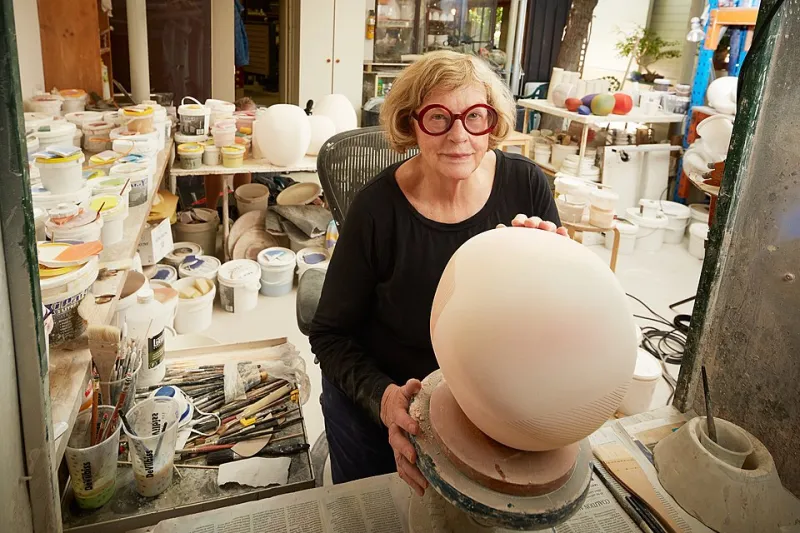
Photo: Robert Frith, CC BY-SA 4.0, via Wikimedia Commons
Let's be real: the design industry has had a complicated relationship with every major tech shift that's come along. Desktop publishing was going to kill print designers. The internet was going to make graphic artists obsolete. Stock photo libraries were going to replace photographers. None of those doomsday scenarios played out quite the way people feared — and the current wave of AI tools probably won't either.
But that doesn't mean nothing is changing. Because something definitely is.
Generative AI is making its way into font design and typography workflows in ways that are surprisingly practical, occasionally weird, and — depending on who you ask — either thrilling or deeply unsettling. Let's break down what's actually happening.
From Blank Canvas to Baseline: AI in the Glyph Creation Process
Traditionally, designing a typeface is one of the most painstaking creative endeavors in the visual arts. A complete Latin character set can include upward of 200 individual glyphs. That's 200 carefully drawn letterforms, each needing to feel optically consistent, balanced, and alive on the page. For independent type designers, that can mean months — sometimes years — of work.
Enter AI-assisted glyph generation. Tools like Glyphs AI plugins, FontLab's experimental features, and standalone platforms are starting to let designers sketch a handful of characters and then let machine learning extrapolate the rest. You define your 'a,' your 'g,' your capital 'R,' and the system takes a crack at filling in the gaps.
The results? Mixed, but genuinely promising. AI-generated glyphs often need heavy human refinement — the curves aren't always optically right, and the spacing can feel mechanical. But the time savings are real. What used to take a week of grunt work can now be a starting point in an afternoon. Think of it less like automation and more like having a very fast, slightly clumsy assistant who gets you 60% of the way there.
Discovery Is Getting Smarter (And Weirder)
On the other side of the creative process — finding the right font for a project — AI is also making waves. Platforms are increasingly rolling out natural-language search and visual similarity tools that let you describe what you're after in plain English.
Need something that feels like "a 1970s sci-fi paperback but make it friendly"? AI-powered search tools are getting genuinely good at surfacing options that match that kind of vibe-based brief. For designers who've spent hours scrolling through font libraries trying to articulate something they can only half-describe, this is a legitimate quality-of-life upgrade.
Visual font matching — uploading an image and getting typeface suggestions — has also improved dramatically. It's not perfect, but it's light-years ahead of where it was even two years ago.
The Originality Question Nobody Wants to Dodge
Here's where things get philosophically thorny, and it's worth sitting with the discomfort rather than brushing past it.
AI font generation tools are trained on existing typefaces. That's how they learn what a letterform is supposed to look like, how serifs behave, how stroke contrast works. Which raises a legitimate question: if a machine learns from thousands of fonts created by human designers — many of whom never consented to their work being used as training data — and then generates new typefaces based on those patterns, who owns what?
This isn't a hypothetical debate anymore. Type foundries in the US and Europe have started raising formal objections, and some have begun watermarking their fonts or restricting licensing terms specifically to prevent AI training use. The legal landscape is murky and evolving fast.
For working designers, the practical implication is this: if you're using AI tools to generate typefaces for commercial use, you need to understand what the tool was trained on and what the terms of service actually say. "It came from an AI" is not a legal shield, and it's not an ethical one either.
What Responsible Integration Actually Looks Like
None of this means you should swear off AI tools — that would be both impractical and unnecessarily dramatic. But it does mean being intentional about how you bring them into your workflow.
Use AI for speed, not shortcuts on craft. The designers getting the most out of these tools aren't using them to replace their judgment — they're using them to handle the mechanical repetition so they can spend more time on the decisions that actually require taste and expertise. AI can draft; you refine.
Stay curious about provenance. Before you commit to a tool, dig into what it's trained on. Some platforms are being transparent about using licensed or purpose-built datasets. Others are less forthcoming. Ask the question, and if you can't get a clear answer, factor that uncertainty into your decision.
Don't outsource your aesthetic voice. This is the quieter risk that gets less attention than the legal stuff. If you're letting AI make too many of the creative decisions — which letterforms to use, how to pair typefaces, what visual tone to strike — you're slowly outsourcing the thing that makes your work yours. AI is a collaborator, not a creative director.
Keep learning the fundamentals. Knowing why certain typefaces work in certain contexts — the history, the optical principles, the cultural connotations — makes you a better operator of AI tools, not a redundant one. The designers who understand typography deeply are the ones who can tell when an AI suggestion is brilliant and when it's subtly off.
The Studio Isn't Going Anywhere
Here's the part that often gets lost in the breathless coverage of AI disruption: typeface design at its highest level is still deeply, stubbornly human. The fonts that define eras — that carry meaning, that feel inevitable — come from designers who obsess over details that no algorithm has been trained to care about. The way a particular curve echoes a cultural moment. The decision to break a rule because the rule was wrong for this project.
AI can accelerate a lot of what happens in a design studio. It can surface options faster, handle production tasks, and help smaller teams punch above their weight. That's genuinely valuable, and dismissing it out of hand would be its own kind of creative stubbornness.
But the creative vision — the reason a typeface feels right for a brand, a book cover, a protest poster — that still lives with the designer. For now, at least, the machine needs someone to tell it what to dream.
And honestly? That seems like a pretty good place for us to be.