Kerning and Cash: The Indie Type Designers Turning Fonts Into Full-Time Fortunes
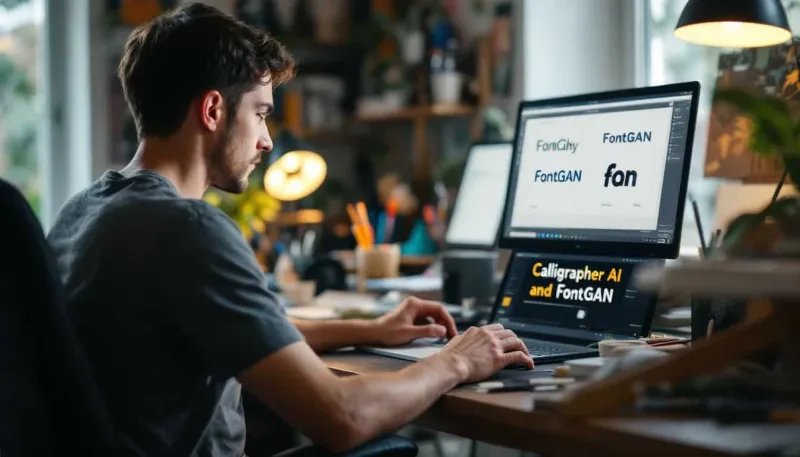
Photo: independent font designer working at desk with typography sketches and computer, via www.unfinishedman.com
Not long ago, making a living as an independent font designer seemed like a fantasy reserved for a handful of elite studios. Today, that narrative is changing fast. Across the US, a new generation of type designers is quietly building businesses that generate anywhere from $50,000 to well over $200,000 a year — all from selling the fonts they design in their spare bedrooms, coffee shops, and converted garages.
So what changed? A combination of accessible distribution platforms, growing demand from content creators and small businesses, and a shift in how the design industry values custom typography has opened up real opportunity. If you've ever wondered whether your love for letterforms could pay the bills, keep reading.
From Passion Project to Primary Income
Take the story of Marcus Webb, a self-taught type designer based in Austin, Texas. He started uploading free fonts to marketplaces in 2018, mostly as a creative outlet while working a day job at a mid-size marketing agency. Within 18 months, his free offerings had racked up hundreds of thousands of downloads — and he started getting emails from brands asking about commercial licensing.
"That's when I realized I was leaving money on the table," Marcus says. "People wanted to pay for my work. I just hadn't given them a real way to do it."
He launched a premium line of fonts alongside his free catalog, priced between $29 and $79 per license. In his first full year of selling premium fonts, he cleared $40,000 in revenue — while still working full-time. By year two, he'd quit his agency job entirely.
Stories like Marcus's are becoming more common, and the business models behind them are worth breaking down.
The Three Revenue Streams Powering Indie Type Businesses
1. Direct Sales and One-Time Licenses
The most straightforward approach: you design a font, list it on a platform (or your own site), and sell licenses directly to customers. Platforms like Creative Market, MyFonts, and FontSpring take a cut — typically between 30% and 50% — but they bring built-in traffic that's hard to replicate from scratch.
Many successful designers use these platforms as top-of-funnel discovery tools, then work to migrate their most loyal buyers to a direct storefront where they keep a larger share of revenue. Tools like Gumroad or even a simple Shopify setup make this surprisingly manageable.
Pricing strategy matters enormously here. Designers who offer tiered licensing — personal use, small business, extended commercial — consistently report higher average order values than those who use a flat, one-size-fits-all model.
2. Subscription and Bundle Models
Subscription fatigue aside, font subscriptions are genuinely working for indie designers who build them right. The key is providing ongoing value — regular new releases, exclusive variations, early access to works in progress — rather than just locking existing work behind a paywall.
Jasmine Tran, a display type designer based in Portland, Oregon, launched a Patreon-style membership for her font studio in 2021. For $15 a month, subscribers get access to her full catalog plus two to three new releases each month. She currently has around 800 active members, which translates to roughly $12,000 in predictable monthly revenue before any one-time sales.
"The subscription changed everything for my mental health as a business owner," she says. "Knowing that baseline is there every month means I can take creative risks without panicking."
3. Custom Licensing and Bespoke Projects
For designers who've built a recognizable style, custom work can be the highest-margin revenue stream of all. Brands — especially in the food, beverage, and lifestyle sectors — are increasingly commissioning exclusive typefaces rather than relying on off-the-shelf options. These projects can range from $5,000 for a small brand to $50,000+ for a national campaign.
Getting to this level requires visibility. Most designers who land custom work do so because a brand found them through their free or affordable catalog first. Think of your publicly available fonts as an extended portfolio that works for you around the clock.
Building an Audience Before the Sale
Every successful indie type designer we spoke with emphasized one thing above everything else: community building comes before revenue. Whether it's posting type sketches on Instagram, sharing process videos on YouTube, or contributing to type design forums, the designers who thrive are the ones who show up consistently and share their craft openly.
Social proof matters in this industry. A font with 10,000 downloads and a handful of visible testimonials will always outsell a technically superior font with no social footprint.
The Tools Making It Possible
The barrier to entry for font creation has dropped dramatically. Software like Glyphs App (Mac) and FontLab makes professional-grade type design accessible to dedicated learners, and there's a thriving online community around both tools. On the business side, platforms like Fontself, Creative Market, and even Etsy have made distribution genuinely plug-and-play.
The learning curve is real — designing a complete, production-ready typeface takes serious time and skill — but the resources available today make it far more achievable than it was even five years ago.
What It Actually Takes
Let's be honest: building a six-figure font business doesn't happen overnight. Most of the designers who've reached that milestone spent two to four years building their catalog, growing their audience, and refining their business model before hitting their stride.
But the compounding nature of digital product businesses is genuinely powerful. A font you design today can generate sales for years without additional work. Every new release builds on the credibility of your existing catalog. And unlike client services work, your income isn't directly tied to your hours.
If you're serious about making the leap, start small: design one great font, release a free version to build downloads and credibility, then launch a premium companion or expanded version. Use the feedback from your audience to guide your next project. Repeat.
The path from side hustle to full-time is rarely linear — but for a growing number of independent type designers, it's very, very real.